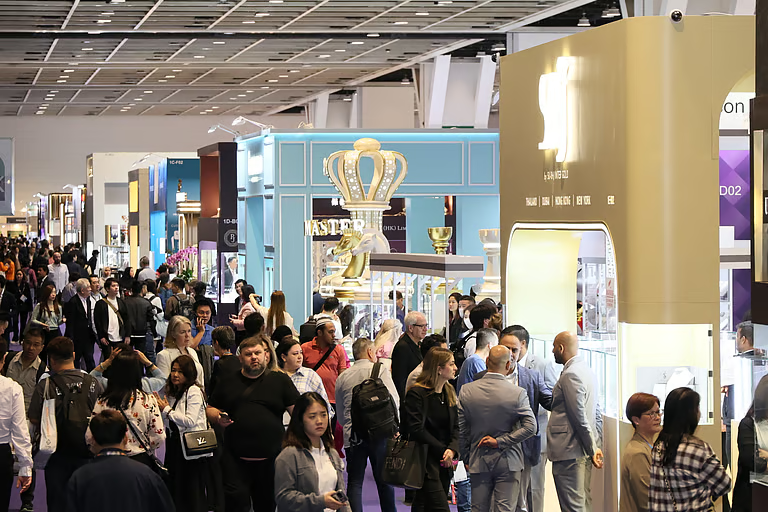

In the high-stakes world of global trade, where every tariff and policy shift can rewrite supply chains overnight, China’s latest moves on watch and clock exports are sending ripples through the luxury and manufacturing sectors. As a Bloomberg veteran who’s covered the gritty intersections of finance, fashion, and geopolitics, I’ve seen how Beijing’s decisions don’t just move markets—they redefine them. Picture this: factories in Guangdong humming with precision gears, exporters navigating a maze of U.S. tariffs, and B2B buyers in Hong Kong scrambling for reliable sourcing strategies. That’s the scene unfolding right now, as of November 2025, with China’s export policies tightening amid escalating U.S.-China tensions. For sourcing professionals eyeing the watch and clock industry, this isn’t abstract news—it’s a call to action. Let’s break it down, from the policy punches to practical plays for staying ahead.
The Policy Punch: Beijing’s Export Controls in the Spotlight
China, the undisputed powerhouse in watch and clock manufacturing, has long dominated global supply with its blend of scale, affordability, and innovation. But recent announcements from the Commerce Ministry are dialing up scrutiny on key components, particularly those involving rare earth elements essential for high-end timepieces. In a move that echoes broader trade frictions, Beijing paused sweeping rare-earth export curbs for a year but simultaneously bolstered its oversight taskforce—the biggest hiring spree in years for the unit handling such restrictions. This isn’t just bureaucratic reshuffling; it’s a strategic flex, aimed at safeguarding critical materials used in everything from smartwatch batteries to mechanical movements.
Why now? Enter the U.S.-China trade tango. President Trump’s administration rolled out reciprocal tariffs earlier this year, slapping hefty duties on Chinese goods—including a whopping 125% on certain imports—to counter what Washington calls unfair practices. In response, China didn’t blink. It ended retaliatory levies on some U.S. farm products but lifted export controls on American firms only selectively, while expanding restrictions on rare earths tied to semiconductors and defense tech—sectors that overlap with advanced watch tech like IoT-enabled clocks. The result? A fragile truce post-Trump-Xi summit, but with export licenses now mandatory for foreign firms using Chinese rare earths in final products.
For the watch and clock trade, this means heightened compliance hurdles. Exporters must now prove that their shipments—whether quartz mechanisms or luxury casings—don’t incorporate restricted materials without proper nods from Beijing. It’s a far cry from the free-flowing exports of yesteryear, when China shipped billions in timepieces annually without such red tape. And with U.S. ports now hitting Chinese vessels with steep fees—estimated at millions per ship—the logistics layer just got pricier.
Export Data Tells a Tale of Resilience and Strain
Don’t let the headlines fool you: China’s watch export machine is still revving, even if it’s sputtering under pressure. Overall Chinese exports have shown unexpected resilience, accelerating in spots despite U.S. slumps—growth hit the fastest pace in six months back in August, buoyed by demand from Southeast Asia and India. But zoom in on watches and clocks, and the picture gets nuanced. Shipments of these goods held steady in value terms through mid-2025, reflecting factories’ pivot to non-U.S. markets amid the tariff storm.
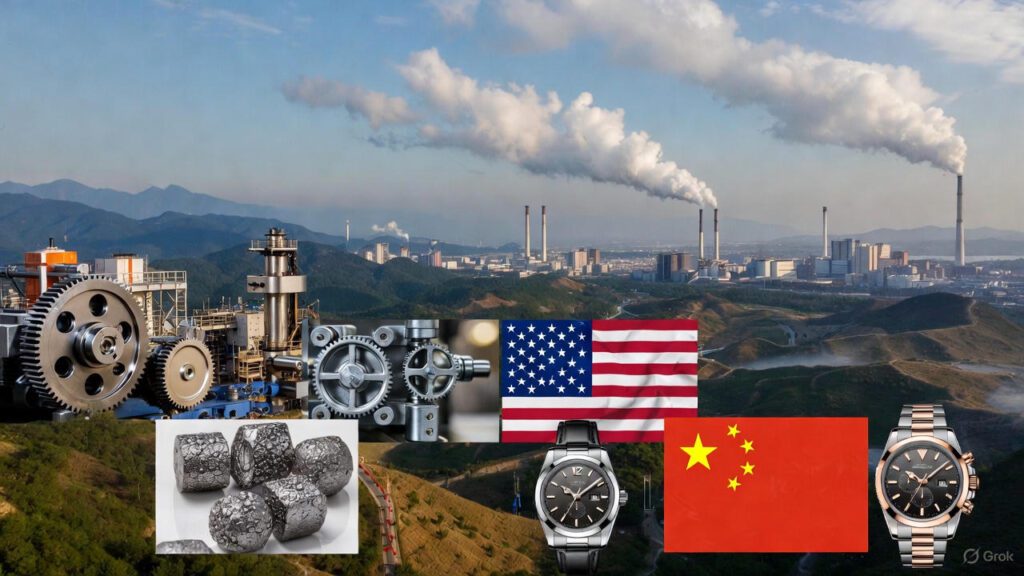
The real story, though, is the knock-on effects. Swiss watch exports—a bellwether for global luxury demand—plunged in October, down 4.4% year-over-year, hammered by a 47% drop to the U.S. but buoyed by double-digit gains to China. Why the rebound in Beijing? Policies easing domestic luxury spending, like relaxed duty-free rules in Hainan, are funneling more high-end imports back home—over 5 billion Swiss francs from mainland China and Hong Kong alone in the prior year. Yet for Chinese exporters, U.S. tariffs mean rerouting: Hong Kong’s re-exports, once a smooth conduit, now face compounded risks from mainland integration and global fragmentation.
This policy pivot isn’t isolated. Beijing’s broader export controls—now covering 12 rare earths—target chips and defense but snag watchmakers reliant on neodymium for magnets in movements. Factories are adapting, but B2B buyers report delays in component sourcing, with lead times stretching as licenses bottleneck the pipeline. It’s a reminder: in the watch world, where precision is king, policy delays are the ultimate disruptor.
Sourcing Strategies: Arming B2B Buyers for the New Normal
Alright, enough doom-scrolling—let’s talk tactics. For B2B buyers in the watch and clock space, especially those in Hong Kong’s vibrant trade hub, these policy shifts demand agile sourcing strategies. First, diversify your supplier base. China’s dominance is real, but look to Vietnam and India, where watch assembly is ramping up to dodge U.S. duties. Hong Kong firms, leverage your “super connector” status: use the city’s free port perks to blend mainland components with regional assembly, minimizing tariff exposure.
Second, lock in compliance early. With export licenses now a must for rare-earth-infused parts, audit your supply chain for restricted materials and build buffer stock. Partner with vetted Chinese factories via platforms like SourcingGuides.com to ensure transparency—think verified ESG audits and real-time tracking. And don’t sleep on tech: AI-driven forecasting tools can predict policy ripples, helping you hedge against sudden curbs.
Third, tap emerging markets. As U.S. demand cools—exports there down sharply—pivot to Europe’s stabilizing appetite or Southeast Asia’s boom. For luxury buyers, China’s domestic rebound offers a silver lining: co-manufacturing deals with Shenzhen innovators could yield cost savings on smartwatches, blending Beijing’s policy thaw with global appeal.
Finally, negotiate like your margins depend on it—because they do. Bulk contracts with flexible clauses for tariff pass-throughs can shield against volatility. In Hong Kong, where trade volumes tie directly to mainland policies, join industry forums to lobby for smoother cross-border flows. Remember, in B2B sourcing, foresight isn’t optional—it’s your competitive edge.
The Bigger Picture: Trade Truce or Tempest Ahead?
As we wrap this dispatch, one truth stands out: China’s watch export policies are the latest chapter in a trade saga that’s far from over. The Trump-Xi meeting defused immediate bombs, halving fentanyl-linked tariffs and pausing rare-earth escalations, but red lines remain—Xi’s firm stance on U.S. curbs signals more sparring ahead. For the watch and clock industry, this means opportunity amid uncertainty: resilient exports, shifting demands, and a push toward sustainable, tech-infused timepieces.
B2B buyers, take note—this is your cue to rethink, retool, and reposition. In a world where policies pivot faster than a chronograph, the smart sourcers will thrive. Stay vigilant, diversify boldly, and keep your eye on the ticking global clock. Because in trade, as in timekeeping, precision pays off.
(Word count: 1,052)
Data Cited in Article
| Data/Figure | Source |
|---|---|
| China’s hiring spree for export control taskforce is the biggest since 2022. | Bloomberg: China’s Export Control Taskforce Adds Most Headcount Since 2022 |
| Plans for rare-earth export curbs paused for a year. | Bloomberg: China Says Plans for Rare-Earth Export Curbs Paused for a Year |
| 125% reciprocal tariff on Chinese imports to U.S. | Wrist Aficionado: The Impact of U.S. Tariffs on the Watch Market |
| China ends levies on U.S. farm goods and halts export curbs on firms. | Bloomberg: China Ends Levies on US Farm Goods, Halts Export Curbs on Firms |
| China expands rare earths restrictions to 12 elements. | Reuters: China expands rare earths restrictions, targets defense and chips users |
| China exports of clocks and watches valued at US$4.79 billion in 2023. | Trading Economics: China Exports of clocks and watches |
| Swiss watch exports fell 4.4% in October 2025 to 2.2 billion Swiss francs, with U.S. down 47%. | Bloomberg: Swiss Watch Exports Fell Again in October on US Tariff Hit |
| Mainland China and Hong Kong spent more than 5 billion Swiss francs on watches in 2023. | Renub Research: China Watch Market Trends & Forecast 2025–2033 |
| Hong Kong growth projected at 2.1% in 2025 amid trade tensions. | AMRO: Hong Kong, China: Sustaining Recovery in a Fragmenting Global Economy |
| U.S. port fees on Chinese ships estimated at $3.5 million per standard load. | POLITICO: The US and China are about to launch the next front in their trade war |
References
- Bloomberg: China’s Export Control Taskforce Adds Most Headcount Since 2022
- Bloomberg: China Says Plans for Rare-Earth Export Curbs Paused for a Year
- Wrist Aficionado: The Impact of U.S. Tariffs on the Watch Market
- Bloomberg: China Ends Levies on US Farm Goods, Halts Export Curbs on Firms
- Reuters: China expands rare earths restrictions, targets defense and chips users
- Trading Economics: China Exports of clocks and watches
- Bloomberg: Swiss Watch Exports Fell Again in October on US Tariff Hit
- Renub Research: China Watch Market Trends & Forecast 2025–2033
- AMRO: Hong Kong, China: Sustaining Recovery in a Fragmenting Global Economy
- POLITICO: The US and China are about to launch the next front in their trade war
Disclaimer: This article is for informational purposes only and does not constitute financial, legal, or investment advice. All data has been fact-checked against cited sources as of November 24, 2025. Market conditions can change rapidly; consult professionals for personalized guidance. SourcingGuides.com and its affiliates are not liable for any actions taken based on this content.