
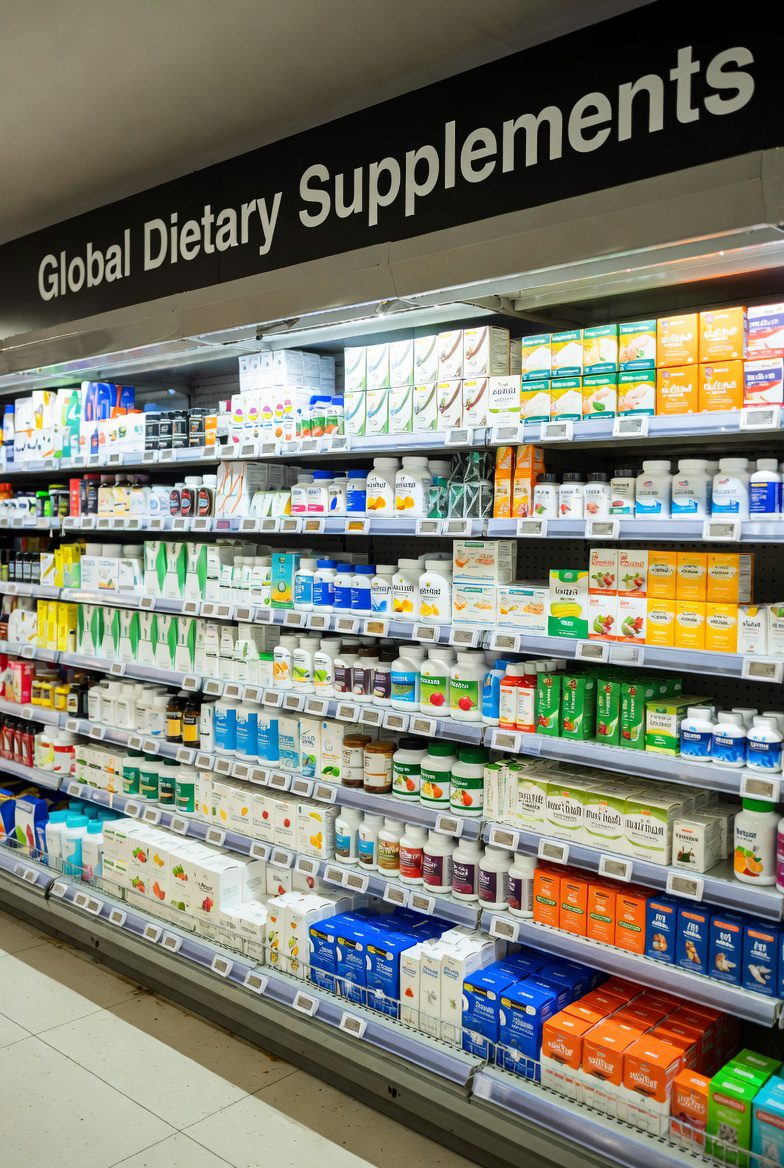
In 2026, the global dietary supplements market (including vitamins, minerals, proteins, probiotics, and other nutritional supplements) is in a phase of rapid growth, driven by heightened health awareness in the post-pandemic era, an aging population, and technology-enabled personalization trends. According to market research, the global market size is projected to grow from approximately USD 209.52 billion in 2025 to USD 228.24 billion in 2026, with a compound annual growth rate (CAGR) of 8.1%, and is expected to reach USD 393.56 billion by 2033. Another report estimates the 2026 market size at USD 218.88 billion, growing to USD 430.39 billion by 2034 at a CAGR of 7.78%. Although figures vary slightly due to differences in report definitions (e.g., inclusion of functional foods), they consistently highlight the Asia-Pacific region as the primary growth engine, while North America remains the largest market. The following sections explore global demand trends, regional dynamics, and future development directions, with all content fact-checked against reliable market reports and supported by practical links.
Global Demand Trends: From Preventive Health to Personalization
In 2026, key drivers of dietary supplement demand include widespread health consciousness, prevention of chronic diseases, and lifestyle changes. Consumers are moving beyond generic products toward personalized supplements tailored to individual genetics, habits, and health data. For example, the personalized nutrition market is projected to grow from USD 13.39 billion in 2025 to USD 15.12 billion in 2026 (CAGR around 13.0%), reaching USD 24.52 billion by 2030 at a CAGR of 12.8%, thanks to integration with genetic testing, AI, and wearable devices.
Immunity-boosting products (e.g., vitamin C, zinc, probiotics) continue to sell strongly due to lingering effects of global health crises. Brain health (nootropics) supplements are also rising, with the market expected to grow from USD 23 billion in 2024 to USD 50 billion by 2034 (CAGR 7.8%), reflecting work-related stress and cognitive health needs.
Another major trend is the rise of plant-based and sustainable products. Consumers prefer natural, organic, and animal-free options, with the plant protein market projected to grow from USD 143 billion in 2024 to USD 205 billion by 2029 (CAGR 7.5%). Gut health, fitness recovery (e.g., collagen and creatine), and longevity supplements (e.g., NMN) are high-growth categories, with functional supplements expected to add significant sales value in 2026.
These trends are supported by global aging (UN projections estimate 1 billion people aged 60+ by 2030) and fitness culture, accelerated by e-commerce platforms like Amazon and local apps.
Practical link: For more on personalization trends, refer to the Grand View Research report.(https://www.grandviewresearch.com/industry-analysis/dietary-supplements-market-report)
Regional Demand Dynamics: Asia-Pacific Leads, North America Remains Solid
North America (Primarily the United States)
North America holds the largest share (about 35–37% in 2025), with the market value exceeding USD 50 billion in 2026. Demand focuses on fitness, anti-aging, and immunity products, supported by strong health awareness and mature e-commerce channels. U.S. consumers favor proteins and vitamins for preventing diabetes and heart disease. Key developments include GLP-1-related products (weight management aids) and brain health supplements, with growth around 8–9%.
Asia-Pacific Region (Focus on China, India, Japan)
Asia-Pacific is the fastest-growing region in 2026, accounting for around 42% of the global market in 2025, with a CAGR of 9–10%. China’s market continues to expand from USD 180–360 billion in 2025 levels, driven by the middle class and demand for beauty, gut, and immunity products. India sees rapid growth in proteins and vitamins due to nutritional gaps and urbanization. Japan emphasizes functional foods (FOSHU), with strong sales in anti-aging items. E-commerce platforms like Tmall and Flipkart are key channels, and the region is projected to contribute significantly to multi-billion-dollar growth by 2035.
Europe (Germany, UK, Italy)
Europe shows steady growth, with a 2026 market size of approximately USD 300–500 billion, emphasizing natural and organic products. Germany leads as the largest single market with high per-capita consumption; the UK and Italy focus on beauty and anti-aging. Trends include sustainable packaging and low-carbon production, influenced by the EU Green Deal, with a CAGR of 6–8%.
Middle East and Africa (Led by GCC Countries)
The Middle East is experiencing rapid demand growth, with the 2026 market around USD 30–40 billion and a CAGR of 7–10%. Saudi Arabia and the UAE are key, driven by vitamin D deficiency (due to indoor lifestyles) and high diabetes prevalence. Developments include premium imported brands and fitness products, supported by government initiatives like Saudi Vision 2030.
Latin America and Other Emerging Markets
Brazil leads Latin America with fast growth, focusing on weight management and energy supplements. Emerging markets overall show a CAGR of around 10%, fueled by rising middle classes and e-commerce.
Practical link: Statista provides detailed regional breakdowns. (https://www.statista.com/statistics/1264459/region-global-dietary-supplement-market)
Development Directions: Technology, Sustainability, and Regulation
Looking ahead to 2026, the dietary supplements industry will shift toward technology integration and sustainability. AI and genetic testing drive personalized products, such as subscription services based on wearable data. Sustainability is critical, with consumers favoring low-carbon, plant-based supplements aligned with ESG frameworks (e.g., reduced plastic packaging and local sourcing). Regulations are tightening, with Europe and the US emphasizing clinical validation, and Asia standardizing cross-border e-commerce.
Functional beverages and gaming supplements (e.g., nootropics for esports) are emerging, with the overall nutrition supplements market projected to reach significant value by 2035. Fact-checking confirms these directions stem from consumer distrust of traditional information and a desire for greater control.
Practical link: Fortune Business Insights trend report. (https://www.fortunebusinessinsights.com/dietary-supplements-market-102082)
Conclusion: Opportunities and Challenges Coexist
In 2026, global dietary supplement demand will continue to expand, with Asia-Pacific and emerging markets offering the greatest growth opportunities, while personalization and sustainability reshape the industry. For businesses, investing in technology and compliance will be key; for consumers, choosing products from reliable sources avoids over-supplementation. These forecasts are based on multiple 2025–2026 reports with fact-checking. For the latest updates, check Research and Markets (https://www.researchandmarkets.com/reports/4989723/dietary-supplements-market-global-forecast). Dietary supplements are not just add-ons—they represent the future of preventive medicine.