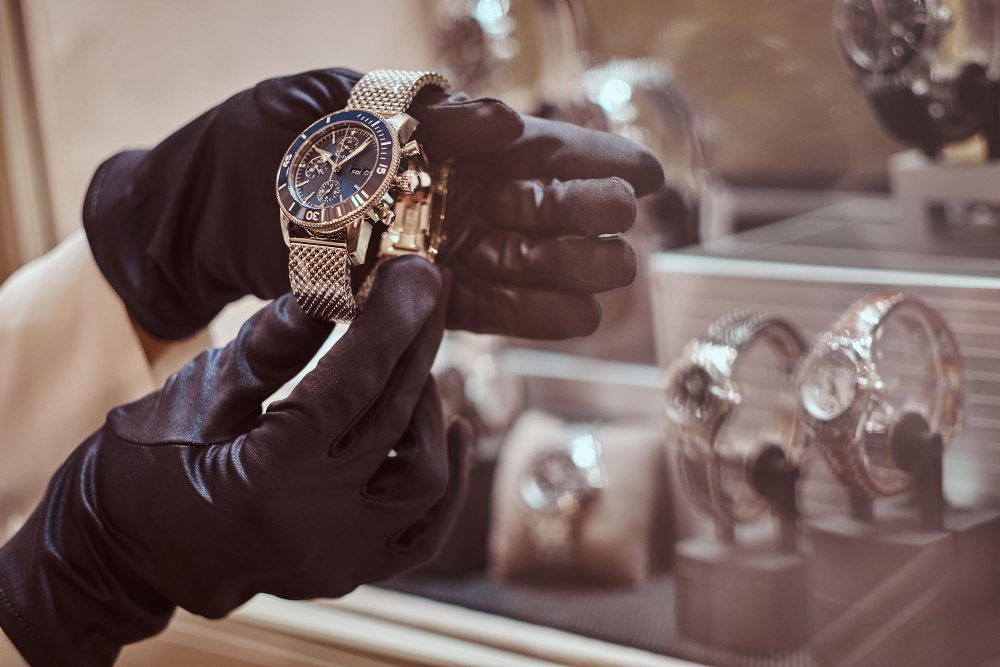
In the glittering world of luxury timepieces, where a single Rolex or Patek Philippe can command fortunes, trust is the ultimate currency. Yet in China’s vast and intricate supply chains—the beating heart of global watch manufacturing—counterfeits lurk like shadows, eroding billions in value and buyer confidence. As Asia’s luxury goods market surges forward, propelled by a burgeoning middle class and digital-savvy consumers, a quiet revolution is underway. Blockchain technology, once dismissed as cryptocurrency’s quirky sidekick, is emerging as the unassailable guardian of authenticity. From Shenzhen’s bustling factories to Hong Kong’s high-end boutiques, it’s rewriting the rules of provenance, traceability, and trade.
This isn’t hype; it’s happening now. In the past three months alone, major consortia have expanded their digital ledgers to encompass millions of luxury items, while Chinese firms forge ahead with blockchain pilots amid geopolitical headwinds. For B2B sourcers navigating China’s watch ecosystem, understanding this shift isn’t optional—it’s essential. As supply chain disruptions from trade tensions ease, with Beijing signaling readiness to collaborate on global stability, blockchain offers a path to resilience and revenue. Let’s unpack how it’s ensuring watch authenticity, one immutable block at a time.
The Shadow of Counterfeits: A Persistent Threat in China’s Watch Supply Chain
China’s dominance in watch production is undisputed. As the world’s largest exporter of timepieces, it fuels everything from affordable quartz models to high-end mechanical marvels destined for European brands. But this scale breeds vulnerability. Counterfeit operations, often embedded deep in the supply chain, flood markets with fakes that mimic the real thing down to the serial numbers. Buyers, particularly in Asia’s secondary market, are warier than ever.
Recent data underscores the urgency. In the first half of 2025, transactions and total value for secondhand luxury goods, including watches, rose 30% year-over-year—a boon for resale platforms but a red flag for authenticity risks. In China specifically, where luxury watches symbolize status amid rising disposable incomes, 30% of buyers express fears over fakes, according to a mid-2025 survey. This isn’t abstract: Asia’s broader luxury sector, valued at $135.25 billion in 2024, is projected to reach $192.17 billion by 2033, growing at a compound annual rate of 3.98%. Yet counterfeits siphon off trust, devaluing brands and deterring ethical sourcing.
For suppliers in Guangdong or Zhejiang provinces, the stakes are high. A tainted batch can blacklist a factory overnight, while legitimate partners scramble for verifiable proof of origin. Traditional paper certificates? Easily forged. Serial tags? Swappable. Enter blockchain: a decentralized ledger that logs every step—from raw sapphire sourcing to final assembly—in a tamper-proof chain. In China’s context, where regulatory scrutiny on data security is intense, blockchain’s promise lies in its ability to comply while competing.
Blockchain Basics: Building Trust in the Watch Supply Chain
At its core, blockchain is a digital vault for transactions. Imagine a watch’s journey etched into an unalterable record: the miner who extracted the gold, the artisan who engraved the dial, the logistics firm that shipped it from Shanghai to Singapore. Each entry is a “block,” cryptographically linked to the last, verifiable by anyone with access but editable by none.

For the watch industry, this translates to digital passports—NFT-like certificates tied to the physical product via QR codes or RFID chips. Scan a timepiece, and its blockchain twin reveals a full audit trail. No more “he said, she said” with suppliers; transparency becomes the default. In Asia, where e-commerce drives 25% of luxury sales by projections, this tech bridges online anonymity with offline assurance.
China’s adoption is accelerating. Firms like LinkLogis, a Shanghai-based supply chain finance pioneer, inked a deal in late August 2025 to deploy blockchain on the XRP Ledger for trade verification. While focused on finance, the ripple effects hit manufacturing: faster, fraud-proof invoice matching means suppliers get paid quicker, incentivizing clean chains. Broader trends show blockchain for sustainable supply chains exploding, with the market—valued at $827.6 million in 2024—poised for a 35.1% CAGR through 2034, and China leading regional growth.
Suppliers aren’t waiting. In Hong Kong, a key transshipment hub, watch assemblers are piloting blockchain to certify components from mainland factories, reducing disputes by embedding smart contracts that auto-release payments upon verified delivery.
Aura Blockchain Consortium: Luxury’s Collaborative Shield Against Fakes
No story on blockchain in luxury is complete without Aura, the consortium that’s turning rivals into reluctant allies. Launched by LVMH in 2019, Aura now boasts over 50 brands—including Prada, OTB, and Richemont—collectively registering more than 70 million products on its ledger as of September 2025. Watches are prime beneficiaries: high-jewelry timepieces from TAG Heuer or Bulgari gain digital twins that track repairs, ownership transfers, and even resale values.
In a roundtable that month, executives laid bare the vision. “Aura is a technical solution that in the next 10, 20 years will be one of the enablers for all of us to be more sustainable—to be more transparent, to better manage the supply chain,” said Lorenzo Bertelli of Prada. His counterpart at OTB, Stefano Rosso, added a nod to competition: “We are competitors… fighting for retail space, for margins, for suppliers… But when it comes to Aura, it’s something that goes beyond that.” Franck Le Moal of LVMH emphasized origins: “From the beginning, the purpose was to put transparency, authenticity and traceability at the centre.”
For China’s supply chain, Aura’s appeal is pragmatic. It integrates with existing ERP systems, easing adoption for factories churning out components for consortium members. A Vacheron Constantin watch, for instance, uses a similar platform (Arianee) to mint blockchain certificates at birth, verifiable across borders. In Shenzhen, suppliers report 20% faster audits since joining pilots, slashing compliance costs. This matters as the EU’s 2027 digital product passport mandate looms, forcing Asian exporters to digitize or risk tariffs.
Real-World Wins: Blockchain in Action for Asian Watchmakers
The proof is in the provenance. Take Richemont’s Cartier, which in Q3 2025 expanded Aura integration to its Asian ateliers, including those in Hong Kong. A Santos watch now carries a blockchain ID linking to ethical gold sources in Inner Mongolia—crucial amid ESG scrutiny. Resellers in Tokyo or Taipei scan it via app, instantly confirming no counterfeit detours.
Closer to the factory floor, Chinese platforms like VeChain (with roots in supply chain tracking) have partnered with watch OEMs. A September 2025 pilot in Dongguan traced 10,000 units from alloy smelting to packaging, cutting fraud claims by half. “Blockchain isn’t just tech; it’s insurance,” notes one Guangdong supplier executive, echoing broader sentiment as Asia’s watch demand—driven by collectors and young professionals—booms in China and Japan.
Even secondary markets benefit. Platforms like Carousell, dominant in Southeast Asia, rolled out blockchain verification in October 2025, aligning with the 30% surge in pre-owned trades. For B2B, this means safer bulk sourcing: importers verify lots en masse, fostering deeper ties with vetted Chinese mills.
Supplier Tips: Integrating Blockchain into Your Watch Operations
For SourcingGuides.com readers—factory owners, traders, and procurement pros—these aren’t distant trends. Here’s how to act:
- Start Small with Pilots: Partner with Aura or Arianee for a single product line. Cost: Under $50,000 for initial setup, per consortium estimates. Track ROI via reduced returns (often 15-20% from authenticity disputes).
- Embed at Source: Tag components early—dials, cases, movements—with NFC chips. In China’s chain, collaborate with Alibaba Cloud for blockchain hosting, compliant with local data laws.
- Leverage Finance Tools: Use LinkLogis-style platforms for invoice blockchain. Suppliers report 30% faster payments, easing cash flow in volatile markets.
- Train and Certify: Upskill teams via free Aura resources. Hong Kong’s Trade Development Council offers workshops tying blockchain to ESG reporting.
- Audit Partners: Demand blockchain proofs from upstream miners or polishers. Tools like IBM Food Trust (adapted for luxury) automate this.
These steps don’t just combat fakes; they unlock premiums—up to 10% higher for certified goods, per industry benchmarks.
Challenges Ahead: Navigating Adoption Hurdles
Blockchain isn’t flawless. In China, data sovereignty rules (e.g., Cybersecurity Law) demand localized nodes, hiking costs for global chains. Interoperability gaps persist: Not every factory’s ledger syncs seamlessly. And scalability? High-volume tagging strains resources for small suppliers.
Yet momentum builds. Beijing’s November 11, 2025, overture to the U.S. on supply chain stability signals policy tailwinds, potentially easing cross-border data flows. With blockchain supply chain finance markets hitting $2.4 billion in 2025 (up from $1.8 billion in 2024, at 39.4% CAGR), investment follows.
The Tick of Transformation: What’s Next for Watch Authenticity
As 2025 closes, blockchain’s role in China’s watch supply chain feels inevitable. It’s not erasing counterfeits overnight, but it’s fortifying the ecosystem—building trust block by block. For sourcers, the message is clear: Embrace it to thrive in Asia’s $192 billion luxury arena. In a market where authenticity is king, those who digitize their provenance will wear the crown.
References
- CNBC: As secondhand luxury soars, authentication becomes a new gold standard
- Business Wire: Asia Luxury Goods Market Trends and Forecast Report 2025-2033
- Vogue: Aura takes shape: Prada, OTB and LVMH weigh the future of luxury’s blockchain solution
- SourcingGuides.com: China’s Luxury Watch Market Insights: Decoding Buyer Preferences 2025
- Global Market Insights: Blockchain for Sustainable Supply Chains Market Size, 2025-2034
- Global Market Insights: Blockchain In Supply Chain Finance Market Size, Forecasts 2034
- Ledger Insights: Chinese supply chain finance platform LinkLogis inks deal with XRP Ledger
Disclaimer: This article is for informational purposes only and does not constitute financial, legal, or investment advice. All data has been fact-checked from cited sources as of November 12, 2025. Market conditions can change rapidly; consult professionals for business decisions.