In the rarefied world of high-stakes sourcing, where a single decision on a 2-carat stone can ripple through balance sheets and brand narratives for years, the jewellery industry finds itself at a quiet inflection point. The old certainties — that rarity equals value, that earth-mined equals prestige — are being rewritten not in the boardrooms of Antwerp or Mumbai, but in the precisely controlled chambers of Chemical Vapor Deposition (CVD) machines from China to India. As buyers converge on Hong Kong this September for the Jewellery & Gem WORLD Hong Kong (JGW) 2026, the message from the front lines of supply chains is unmistakable: the future belongs to those who master both sides of the diamond divide.
The numbers tell a story of disruption on a scale few predicted even five years ago. The global lab-grown diamonds market is projected to reach approximately US$27–33.5 billion in 2026, with forecasts ranging from US$56 billion to over US$90 billion by 2033–2034, driven by CAGRs of 11–13.5% in many analyses. This is no longer a niche experiment. It is a structural shift that is reshaping pricing, consumer expectations, and — crucially for readers of SourcingGuides.com — sourcing strategies across the B2B jewellery ecosystem.
The Economics of a Parallel Universe
Walk the floors of any major jewellery fair today and you will hear the same refrain from veteran buyers: natural diamond prices, particularly in the commercial grades, have come under sustained pressure. Recent indices show 1-carat natural diamonds trading at wholesale levels that evoke multi-decade lows in certain categories, while comparable lab-grown stones can be acquired for 70–90% less.
This price delta is not merely a temporary oversupply issue. It reflects fundamental differences in production. Natural diamonds require geological epochs and billions of dollars in exploration and mining infrastructure. Lab-grown diamonds are engineered in weeks, with improving consistency and scalability. The result? A bifurcated market where smart sourcers treat natural and lab-grown not as competitors but as complementary portfolios.
“Margins on lab-grown allow us to be far more aggressive in retail pricing and marketing, while natural stones still command the emotional premium for heirloom and luxury positioning,” says one European importer who requested anonymity due to ongoing negotiations with both types of suppliers. “At events like JGW, you can literally compare side-by-side in the same halls and build a mixed inventory that maximizes both volume and aspiration.”
Ethical Calculus and the Millennial Mandate
Beyond raw economics lies a values-driven transformation. Younger consumers — Millennials and Gen Z, who will dominate luxury spending in the coming decade — increasingly demand transparency and reduced environmental impact. Lab-grown diamonds eliminate many of the concerns associated with traditional mining: habitat disruption, water usage, carbon emissions, and, in certain regions, governance risks.
This is not greenwashing. Multiple studies and buyer surveys confirm that ethical and sustainability credentials are moving from nice-to-have to non-negotiable for a growing segment of the market. Lab-grown stones offer a compelling narrative of innovation and responsibility without compromising on the optical and physical properties that make diamonds iconic (they are, after all, chemically identical to their mined counterparts).
Yet the natural diamond industry is adapting. Major players have invested heavily in traceability technologies, responsible mining certifications, and recycled diamond programs. The most sophisticated sourcers understand that the winning play is not choosing sides but curating a balanced offering that speaks to different customer psychographics.
Quality Leap: From Curiosity to Confidence
Early skepticism about lab-grown diamonds centered on quality and consistency. Those days are fading fast. Advances in CVD and HPHT technologies have produced stones with exceptional clarity, color, and size potential — often exceeding the variability found in natural rough. Many experts now argue that top-tier lab-grown material can rival or surpass natural stones in visual perfection for a fraction of the cost.
This quality convergence creates fascinating opportunities at the sourcing level. Buyers can access larger, cleaner stones in lab-grown formats that would be prohibitively expensive or rare in natural form. Customization becomes easier. Supply predictability improves. For manufacturers producing bridal, fashion, and statement pieces, this flexibility is a competitive moat.
JGW 2026: The Ultimate Comparison Laboratory
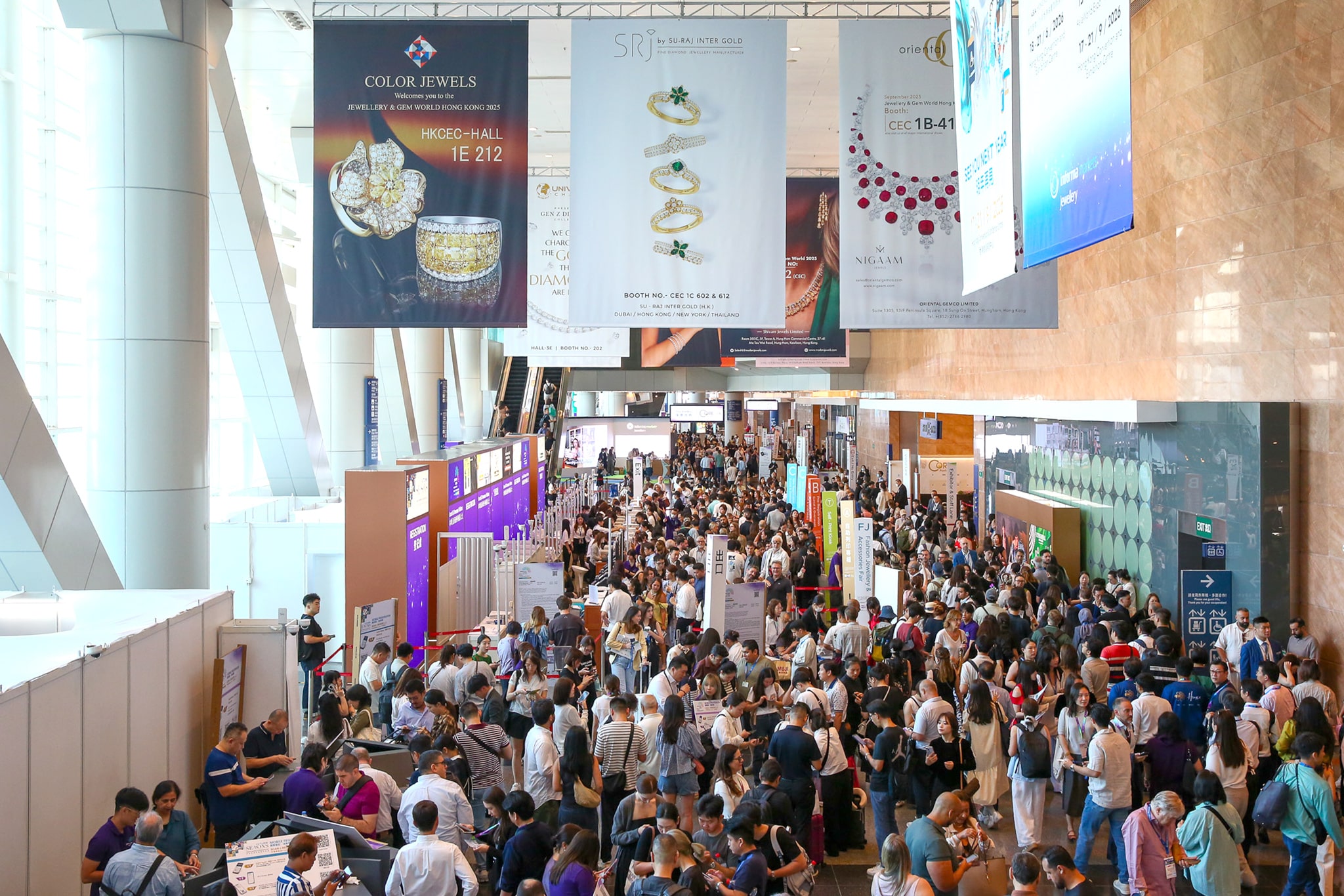
Nowhere will this dual-track strategy be more actionable than at Jewellery & Gem WORLD Hong Kong 2026, scheduled for September 14–18 at AsiaWorld-Expo (AWE) and September 16–20 at the Hong Kong Convention and Exhibition Centre (HKCEC). Organized by Informa Markets, the fair bills itself as “Six Shows. One Trip.” — a highly efficient format that has become essential in a fragmented global sourcing landscape.
At AsiaWorld-Expo, dedicated zones bring the lab-grown revolution into sharp focus:
- JGW: Gemstones (Halls 3, 6, 8 & 10) explicitly features lab-grown diamonds and gemstones alongside emeralds, rubies, sapphires, and Fei Cui.
- JGW: Diamonds & Fine Gems (Halls 5, 7 & 9) showcases white diamonds, fancy coloured diamonds, and fine gems, with lab-grown options readily available for direct comparison.
This proximity is strategic gold for sourcing professionals. In a single venue, buyers can evaluate natural rough and polished stones against lab-grown equivalents from leading producers in China, India, and beyond. Pricing negotiations become data-driven rather than anecdotal. Supply chain due diligence is accelerated. Relationships with both traditional miners and high-tech manufacturers can be nurtured in parallel.
Hong Kong’s status as a free port — with no VAT, general sales tax, or customs tariffs on most jewellery and gem imports/exports — further enhances the economics. The timing, returning to a buyer-friendly September window, aligns perfectly with year-end inventory planning for major Western retail seasons.
Supply Chain Resilience in an Uncertain World
The lab-grown surge arrives at a moment of broader supply chain reevaluation. Geopolitical tensions, mining regulations, and climate considerations have made traditional diamond pipelines more complex. Lab-grown production, concentrated in technologically advanced hubs with improving ESG standards of their own, offers diversification and agility.
For risk managers, the ability to pivot between natural and lab-grown depending on market conditions, currency fluctuations, or consumer sentiment in key markets represents a new form of operational hedging. Those who attended previous editions of JGW and began building lab-grown relationships early are already reaping advantages in pricing stability and product innovation.
Challenges on the Horizon
No disruption is without friction. Natural diamond producers and associated economies face real pressure. Some industry voices worry about brand dilution or consumer confusion between the two categories. Lab-grown manufacturers must continue investing in differentiation — through larger sizes, unique colors, or proprietary processes — to maintain margins as production scales.
There are also questions around long-term resale value and consumer perception. While lab-grown diamonds excel in first-purchase affordability and ethics, natural stones retain their aura for inheritance and investment narratives. The most successful brands and sourcers are transparently educating consumers rather than forcing a binary choice.
Intellectual property around synthesis technologies and potential regulatory distinctions between natural and lab-grown are additional variables to watch.
Strategic Playbook for Sourcing Professionals
For readers focused on practical outcomes, here is what forward-thinking operators are doing ahead of JGW 2026:
- Portfolio Diversification: Allocate inventory across natural (premium/luxury/heirloom), lab-grown (volume/fashion/accessible luxury), and hybrid pieces that combine both.
- On-Site Comparison: Use the AWE halls to conduct rigorous side-by-side evaluations of quality, pricing, and supplier capabilities. Bring gemological tools and your top designers.
- Relationship Building: Cultivate suppliers in both ecosystems. The best lab-grown producers are scaling rapidly and offering increasingly sophisticated customization.
- Storytelling Integration: Develop marketing narratives that leverage the strengths of each — rarity and legacy for natural, innovation and responsibility for lab-grown.
- Data-Driven Negotiation: Arm yourself with current market indices and forecasts. The transparency at JGW gives savvy buyers leverage.
- Sustainability Documentation: Request detailed traceability and environmental impact data for all sourcing options. This will become table stakes for major retail partners.
The Broader Industry Reckoning
What we are witnessing is larger than diamonds. It is part of a profound transformation in luxury goods, where technology, ethics, and economics are forcing every link in the supply chain to evolve. Jewellery, long viewed as a bastion of tradition, is proving remarkably adaptable.
The winners will be those who embrace complexity rather than seeking simplistic answers. They will source with nuance, sell with authenticity, and build businesses resilient enough to thrive in a market that now offers two legitimate paths to brilliance.
As the planes descend into Hong Kong in September 2026 and the halls of AsiaWorld-Expo fill with the quiet intensity of serious commerce, one thing is clear: the game has changed. The question is no longer whether lab-grown diamonds belong in your sourcing strategy. It is whether you have positioned yourself to capture the considerable margins and market share available to those who understand both worlds.
The stones — natural and engineered — are waiting. The smart money is already moving.