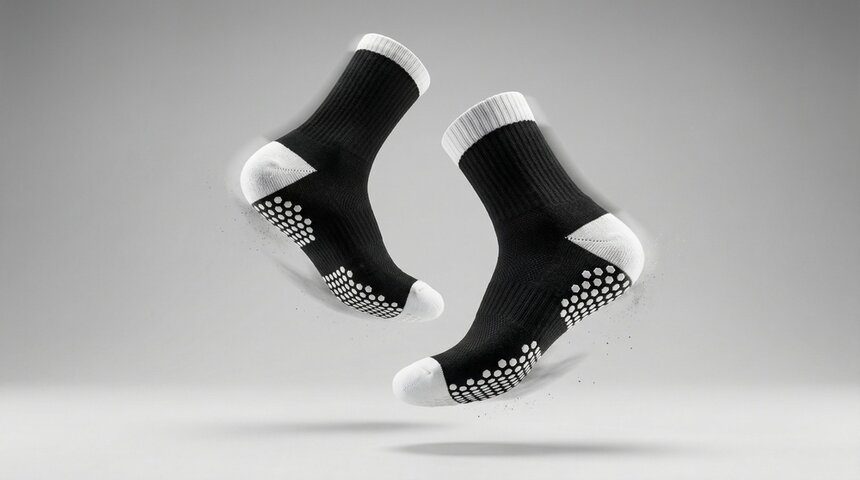

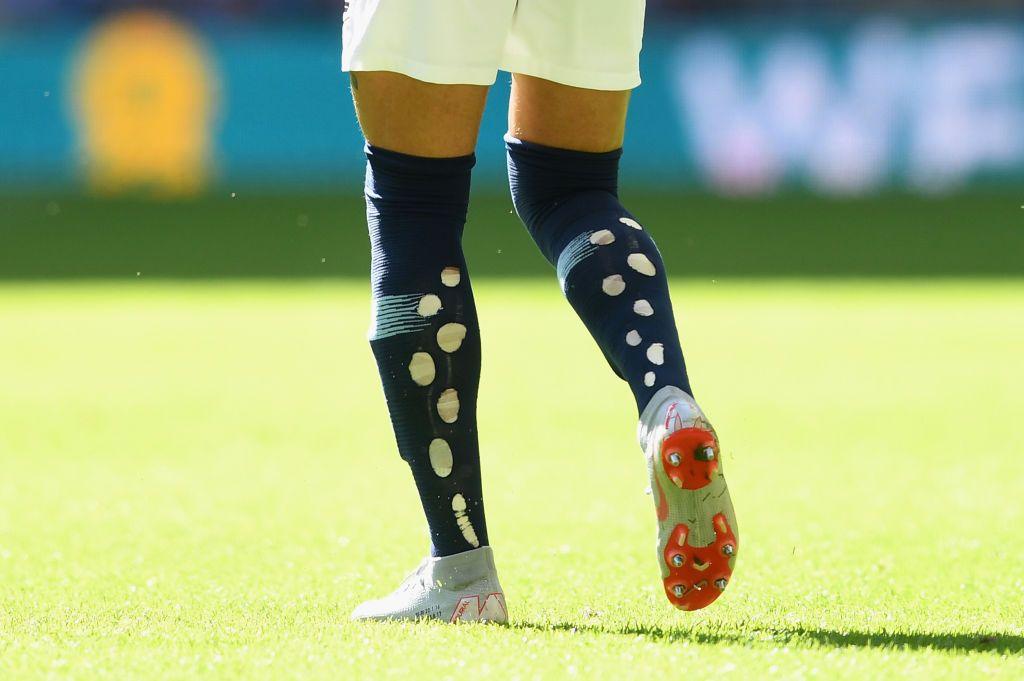
For decades, soccer kits were treated by global apparel brands as unified, untouchable product lines. Millions of dollars poured into high-tech jerseys and shorts, while the humble match sock remained a low-margin afterthought, bundled as a standard piece of elasticized nylon. Then, an organic locker-room workaround shattered this traditional manufacturing model. Elite athletes, seeking to eliminate micro-slippage inside their boots that causes blisters and robs them of explosive speed, began taking scissors to their multi-million dollar official kits. By slicing off the foot of their sponsor-issued socks, players created a crude sleeve, allowing them to wear independent, third-party traction socks embedded with non-slip panels beneath. What began as an unauthorized ten-dollar hack quickly escalated into a multi-million dollar supply chain disruption that has permanently altered the landscape of B2B athletic apparel sourcing.
The Manufacturing Reality Behind the “Two-Part” System
This behavioral shift among athletes exposed a fundamental engineering oversight in traditional athletic hosiery manufacturing. Standard match socks rely on traditional round-yarn knits that become slick when exposed to sweat, causing the foot to slide against the slick synthetic insoles of modern boots. The independent grip socks that players substituted utilized heat-activated polymer pads or specialized high-friction composite threads to lock the foot in place. For B2B buyers and product developers, this unauthorized customization signaled a massive market transition from the traditional single-piece uniform to a more complex, modular two-part system.
Contract manufacturers were suddenly forced to pivot away from high-volume, single-gauge circular knitting machines toward specialized multi-panel production lines. Integrating non-slip silicone elements requires post-knitting curing processes, adding labor-intensive heat-press stages or specialized injection molding to the assembly line. Because these added steps increase production time and manufacturing scrap rates, suppliers had to rapidly re-calculate their baseline margins. Sourcing managers now prioritize factories that offer integrated yarn-level friction technology, which weaves textured microfibers directly into the heel and sole to replicate the grip effect without the added cost and delamination risks of post-applied silicone dots.
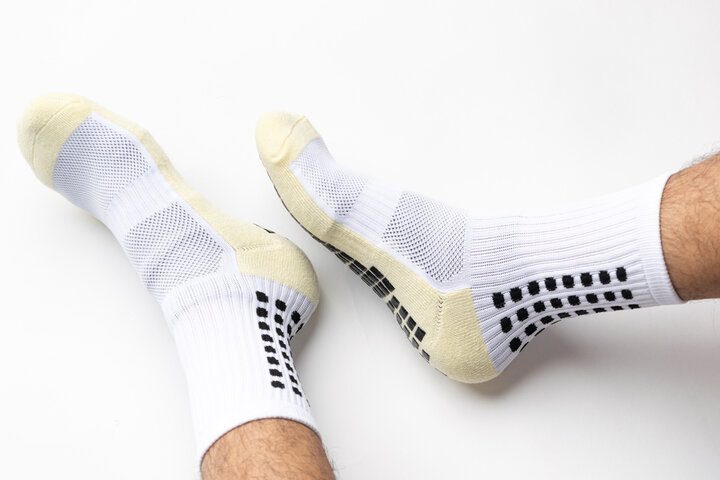
Photo source: Adobe Express
Compliance, Logistics, and the Battle for Uniformity
For international brand managers and corporate distributors, the sudden emergence of the two-part sock system introduced severe regulatory and supply chain headaches. Governing bodies maintain incredibly strict apparel guidelines regarding uniform consistency and branding visibility. If a player wears a third-party grip sock that peeks out above the boot line, it must perfectly match the color of the official team sleeve, and it cannot display unauthorized commercial logos.
This compliance bottleneck forced B2B procurement teams to pioneer highly synchronized dye-lot matching processes. Sourcing a compression sleeve from a factory in one region and a technical grip sock from a specialized hosiery mill in another created a high risk of color variance under intense stadium lighting. To mitigate this, apparel networks have increasingly consolidated their hosiery sourcing under single-source vendors capable of handling both high-stretch elastane sleeves and heavy-gauge traction footbeds. This logistical harmonization ensures that commercial clients can order modular kit components that pass rigorous tournament inspections while maintaining strict brand alignment.
The B2B Opportunity: Scaling Friction Tech Beyond Elite Sports
The disruption of the soccer kit supply chain has paved the way for a massive commercial trickle-down effect across the broader activewear industry. B2B buyers are realizing that the demand for specialized grip hosiery is no longer confined to the elite professional tier. Amateur leagues, youth academies, and fitness verticals like Pilates, barre, and tactical training are rapidly adopting high-traction footwear solutions. Sourcing professionals can find market intelligence and supplier evaluation frameworks on how to vet high-performance textile vendors by consulting detailed procurement playbooks on sourcing guides showcase.
Furthermore, industrial and public safety sectors are taking note of these textile advancements. Government agencies focused on occupational health, such as the U.S. Bureau of Labor Statistics, consistently document that slips, trips, and falls make up a significant portion of workplace injuries. Consequently, commercial buyers for tactical, military, and warehousing industries are actively sourcing grip-sock technology to improve stability and foot health for personnel in high-fatigue environments. By turning an athlete’s rebellious hack into a standardized, scalable product line, the performance apparel supply chain has proven that listening to the end-user’s modifications is often the fastest route to high-margin B2B innovation.