

As autonomous delivery vans hit public roads, logistics giants face a high-stakes gamble. Is replacing drivers a brilliant cost-cutter or a legal nightmare? Discover the 4 brutal truths about public liability, mounting financial risks, and unpredictable safety incidents that procurement managers must evaluate before sourcing driverless fleets.
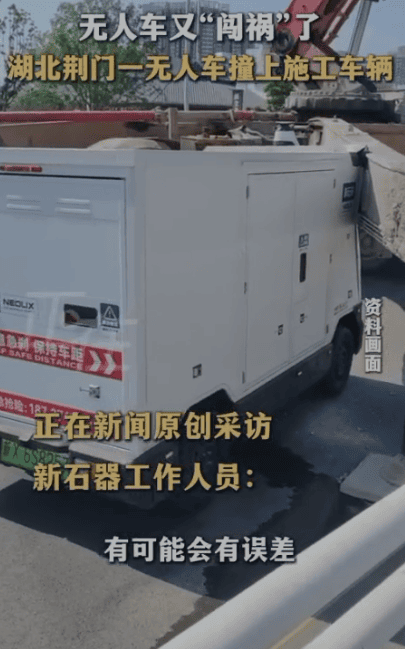
A viral video report published by the Chinese media outlet Zhengzai News has ignited a fierce global debate regarding the operational maturity of driverless commercial fleets. The footage captures a series of chaotic traffic disruptions and physical collisions in busy urban sectors caused by driverless delivery vans failing to navigate ordinary roadside variables. These autonomous vehicles proved completely incapable of dodging basic obstacles, analyzing dynamic road hazards, or completing door-to-door deliveries, leaving a trail of material damage and blocked traffic in their wake. For B2B buyers looking to source cutting-edge logistics solutions, this real-world failure underscores a troubling truth: the technology is frequently proving to be blind, rigid, and financially volatile. Sourcing managers must look past marketing promises and evaluate the harsh legal and operational realities of moving away from human-driven supply chains.
1. The Regulatory Vacuum: Procurement Entities as Primary Risk Bearers
National regulatory frameworks have yet to establish a standardized legal classification for autonomous delivery vehicles, leaving their operational status ambiguous. This legislative lag complicates the application of traditional traffic laws, which were fundamentally predicated on human operational control. Within regional jurisdictions, emerging regulatory frameworks increasingly assign civil liability directly to the owner or managing operator of the fleet. Consequently, procurement organizations face substantial financial exposure. Under these evolving legal structures, even if an incident stems from an algorithmic malfunction or a system glitch, the corporate buyer is typically mandated to settle public liability claims immediately, prior to pursuing indemnification from the manufacturer—a sequence that places severe, upfront cash-flow strain on the sourcing enterprise.
2. Escallating Total Cost of Ownership: The Inflation of Projected Cost Efficiencies
The premise of eliminating labor costs is frequently offset by the significant, ongoing capital deployment required to maintain regulatory and operational compliance. Within heavily regulated deployment zones, municipal mandates require autonomous commercial fleets to carry extensive liability insurance policies, with coverage thresholds often climbing into millions of dollars per asset. When these premium costs are compounded by rapid hardware depreciation, specialized engineering maintenance, and recurring software licensing fees, the total cost of ownership increases exponentially. Quantitative industry data indicates that hardware amortization alone absorbs considerable monthly capital; when proprietary software service fees are integrated, projected margins compress significantly. Sourcing executives must critically vet sub-market fleet leasing bids, as depressed pricing models typically indicate deferred technical maintenance or inadequate support, substantially elevating the risk of catastrophic operational failure.

3. Fragmented Jurisdictional Access: The Operational Sourcing Risk
Achieving scalability in logistics procurement relies entirely on predictable operational landscapes, yet autonomous vehicles remain constrained by hyper-local and volatile road-access permissions. Enterprise-wide deployment cannot scale seamlessly because driverless assets do not possess universal right-of-way privileges on public infrastructure. Procurement teams must instead navigate an intricate, fragmented matrix of municipal permits and regional trial approvals. Within competitive corporate tendering processes, a logistics provider may secure a high-value contract, only for the entire operational framework to collapse if local authorities do not grant the necessary regulatory clearances within strict compliance windows. This regulatory dependency transforms road rights into a critical supply chain vulnerability, wherein a finalized sourcing agreement can be rendered void by a single administrative denial.
4. Algorithmic Rigidities: Systemic Vulnerabilities Threatening Corporate Brand Equity
As commercial autonomous fleets scale and compile higher mileage data, structural operational anomalies are becoming increasingly evident. Empirical traffic safety reviews demonstrate that rear-end collisions constitute nearly half of all documented autonomous vehicle incidents, primarily driven by automated systems executing abrupt, defensive braking protocols that trailing human drivers cannot anticipate. Furthermore, when encountering atypical variables—such as unmapped construction zones, erratic pedestrian movements, or non-standard traffic signals—autonomous systems frequently experience processing anomalies, resulting in mid-lane vehicle immobilizations. For business-to-business buyers, these technological limitations represent a direct threat to corporate brand equity. A high-profile traffic incident involving an automated asset prominently displaying an organization’s corporate identity can swiftly trigger severe reputational damage, punitive litigation, and restrictive regulatory intervention capable of disrupting an entire distribution network.
Conclusion
While the long-term efficiencies of a fully automated logistics network remain compelling, procurement executives must look beyond initial vendor projections to rigorously audit underlying operational liabilities. The current landscape of driverless fleet sourcing is constrained by lagging statutory frameworks, substantial insurance overheads, non-standardized municipal access policies, and systemic technical vulnerabilities. This evaluation does not dismiss the trajectory of logistics innovation, but rather serves as a necessary directive for supply chain leaders: when calculating the net present value of automation investments, corporate balance sheets must explicitly budget for the quantifiable costs of public liability and regulatory risk management.